Driving Plates in Virtual Production: How Car Scenes Get Shot on an LED Wall
Driving scenes can make a car spot stand out by showing a vehicle in its best light — or add visual movement and action to an otherwise ordinary...

Whether through painted backdrops, miniature sets, or on-location shoots, filmmaking has always been about transporting audiences. Today, that same spirit of imagination thrives on virtual sets, where physical craftsmanship and digital artistry converge to tell stories without limits.
This evolution gives creators extraordinary control and freedom. Instead of building every location or relying on heavy post-production, you can capture actors inside vivid, photorealistic digital environments that respond in real time. The result: a seamless blend of real and virtual that keeps the storytelling grounded, efficient, and emotionally engaging.
At the center of this transformation is advanced camera tracking: the invisible link between the physical and virtual worlds. It synchronizes the camera’s real-world movements with digital environments on the LED volume, creating lifelike motion and depth that make every shot feel cinematic.
In this article, we’ll explore how camera tracking brings energy, realism, and creative freedom to virtual productions. Plus, we’ll cover how Forge Virtual Studios helps creators move their cameras to tell stories that truly move audiences.
At the heart of every immersive and believable virtual video production is camera tracking. Think of it as the vital connection between your physical camera and the expansive digital world of a virtual production set. It’s what makes a virtual set feel tangible, ensuring every pan, tilt, and zoom in the physical world is mirrored perfectly inside the virtual environment.
In simple terms, camera tracking maps the camera’s position, orientation, and lens data in three-dimensional space. That information is sent to a real-time rendering engine such as Unreal Engine, which instantly adjusts the perspective of the background displayed on the LED wall. The moment your camera moves, the scene shifts naturally with it, preserving scale and depth just as it would on a physical set.
This synchronization is what transforms static virtual studios into responsive, living stages. It produces the illusion of depth and parallax that convinces viewers your actors are standing in a real location. For directors and DPs, it’s the key to dynamic, cinematic storytelling by allowing for elegant tracking shots, handheld realism, or sweeping crane moves without the constraints of traditional green screens.
With camera tracking, the camera becomes an instrument of storytelling again, not a technical limitation. It gives filmmakers the freedom to move, explore, create, and ultimately turn virtual sets into truly limitless playgrounds for imagination.
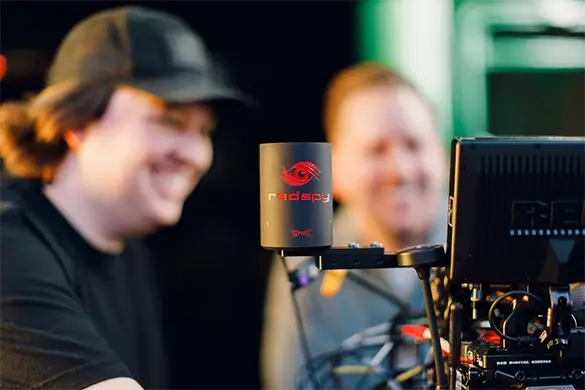
To understand why camera tracking feels so magical, you have to look behind the scenes at the precision engineering that makes it possible. It’s not guesswork—it’s a carefully tuned system between virtual production equipment.
For filmmakers, that means reliability and control. With the right setup, you can design complex, dynamic shots inside virtual studio sets without hitting technical roadblocks. Here’s how the technology works together to make it happen.
At the core are sophisticated tracking systems that capture every nuance of the camera’s motion. One of the most advanced methods is optical tracking, often powered by systems like Stype RedSpy. Using infrared sensors and reflective markers placed across the studio grid, these systems calculate the camera’s position and orientation in real time. This ensures every movement is mirrored perfectly within the digital scene.
This stream of positional data feeds directly into a real-time rendering engine such as Unreal Engine, which updates the perspective of the 3D environment instantaneously. As your camera glides or tilts, the virtual world shifts naturally, maintaining scale and parallax so the shot feels completely real.
This instant feedback means what you see on the LED wall is what you get in-camera. It replaces the uncertainty of green screen workflows with confidence and creative agility, letting teams make artistic decisions live on set.
The final layer of precision comes from lens calibration. Every lens has its own character (distortion, focal length, and field of view) and calibration ensures the rendering engine mirrors those details exactly. By mapping each lens before the shoot, the digital image aligns seamlessly with the physical world.
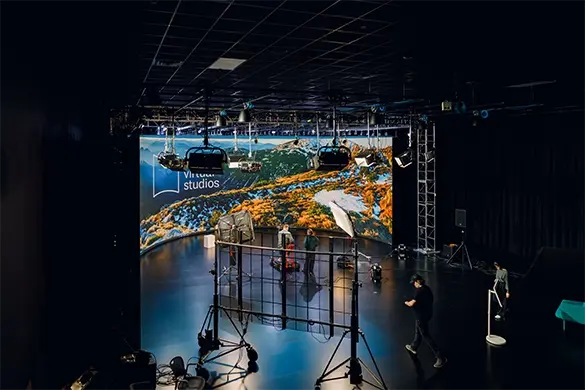
All these elements, from tracking to rendering to calibration, work in harmony inside our LED virtual production environment at Forge Virtual Studios, creating an ecosystem where technology quietly disappears and creativity takes the spotlight.
Picture a sweeping crane moving across a glowing cityscape, or a slow dolly that glides through virtual foliage to capture an actor’s subtle expression. Traditionally, those shots would require elaborate rigs, large locations, and hours of setup. Inside a LED virtual production studio, camera tracking makes them effortless.
The virtual environment on the LED volume adjusts in perfect sync with the camera movements—preserving parallax and perspective in real time. The result is cinematic depth that feels indistinguishable from reality, giving filmmakers the freedom to choreograph motion without compromise.
Camera tracking turns the virtual stage into a playground for storytelling. A handheld shot can convey intensity and realism; a smooth, continuous track can build tension or reveal scale. Each movement adds emotion and meaning, transforming technology into an expressive storytelling tool.
Because everything happens live, your team can see results instantly and refine them together. Directors, DPs, and VFX artists collaborate on set, experimenting with camera angles, timing, and pace until every frame feels right.
At Forge Virtual Studios, this is where creativity and precision meet. We ensure every tracked move feels organic and cinematic, so you can focus on the art of the shot.
The creative freedom camera tracking provides is unmatched, but achieving that level of precision requires both expertise and attention to detail. On any production, predictability and reliability are non-negotiable. Even the smallest disruption can affect timing, quality, or budget.
That’s why Forge Virtual Studios takes a proactive, hands-on approach to setup and calibration. Every LED virtual production stage we operate is optimized to deliver seamless performance from the first shot to the last.
One key element is precision calibration between the physical camera and the virtual environment. Even a millimeter of misalignment can break the illusion of realism, so our team calibrates each lens individually, mapping its unique characteristics to the rendering engine for perfect visual continuity. This careful preparation ensures accuracy long before the first take.
We also eliminate one of the most common challenges in virtual production: latency. Even a few milliseconds of lag between movement and display can disrupt immersion. Our studio uses high-performance hardware and optimized Unreal Engine workflows to maintain ultra-low latency, ensuring every motion translates instantly on screen.
The result is total confidence on set. Directors, DPs, and producers can make decisions in real time, knowing what they see through the lens is exactly what the audience will experience.
Every great story deserves to be brought to life without limits. Camera tracking is what turns that ambition into reality.
When the camera and digital world move together in perfect harmony, the result is full immersion. This is the foundation of extended reality (xR): an environment where talent can interact with virtual elements naturally, and filmmakers can compose shots that feel cinematic and emotionally grounded.
With precise tracking and real-time rendering, your team gains the tools and support to plan, shoot, and deliver at the highest level. It removes the uncertainty, reduces post-production load, and lets you focus entirely on performance and storytelling.
At Forge, we’ve built an ecosystem that makes this creative flow seamless. Our LED virtual production stage, powered by Stype RedSpy and Unreal Engine, gives directors and DPs the tools to experiment freely while we manage the complexity behind the scenes.
We’re here to be your partner in creation. Together, we’ll transform bold ideas into extraordinary, camera-ready worlds.
Ready to see how we can elevate your next project?

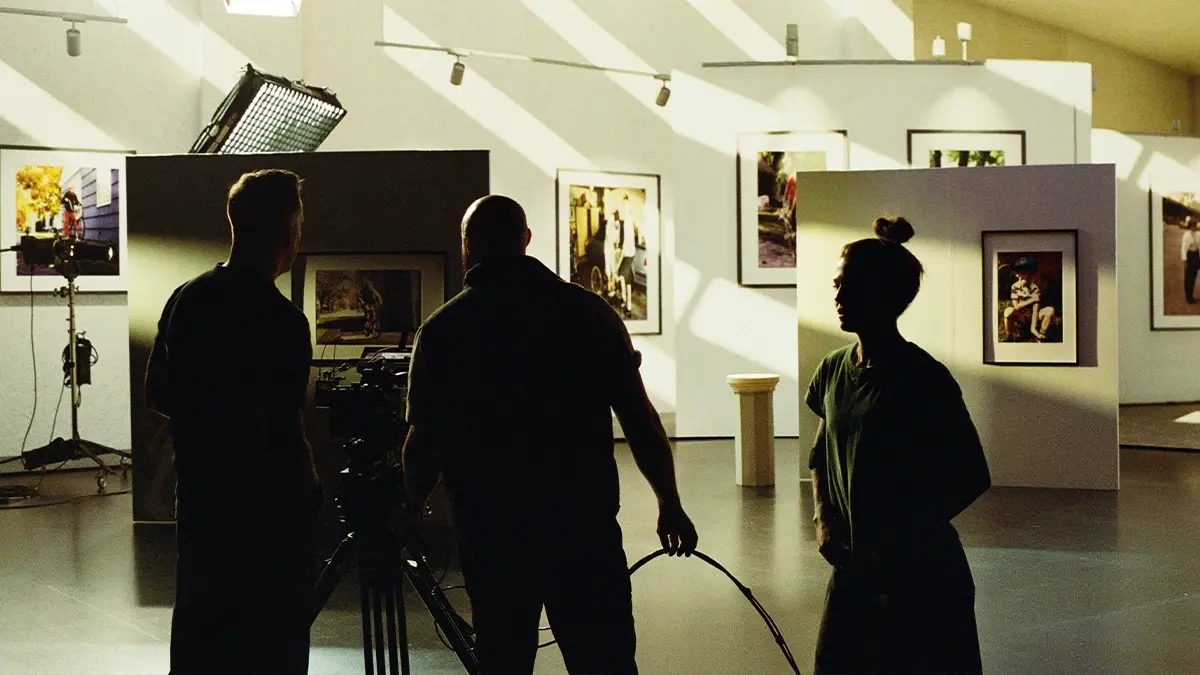
Driving scenes can make a car spot stand out by showing a vehicle in its best light — or add visual movement and action to an otherwise ordinary...
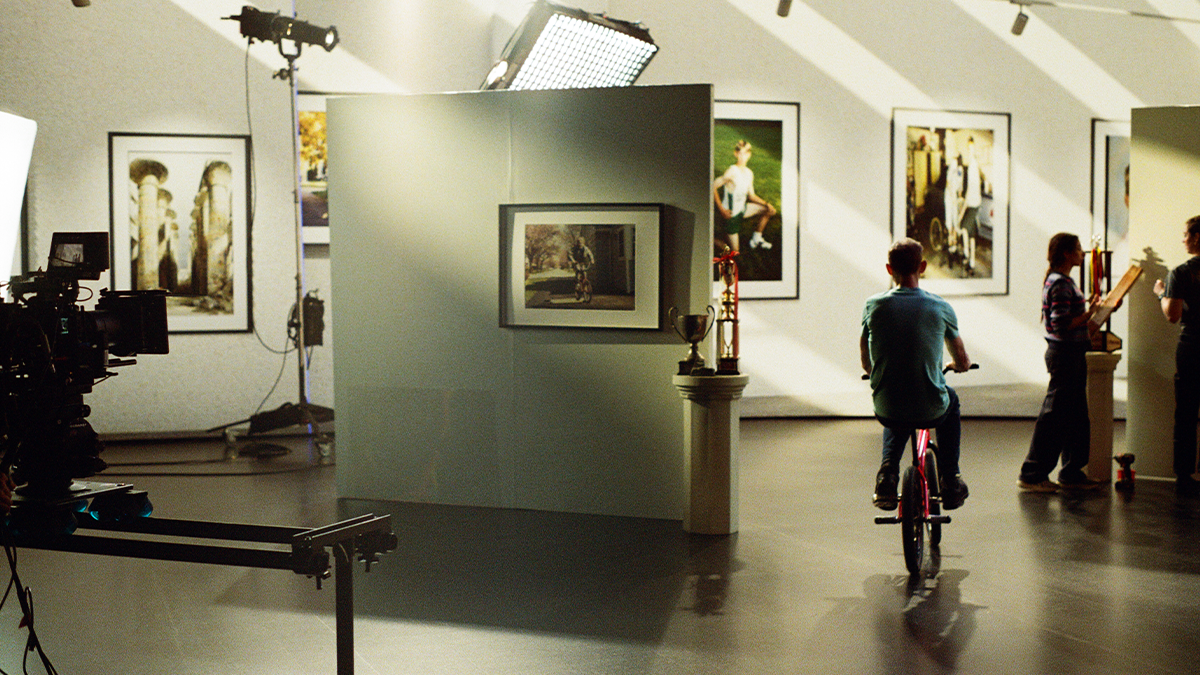
Light-emitting diode (LED) volumes revolutionize what filmmakers can achieve, but this process isn't automatic. The work put in by art directors...
Brands face intense pressure to keep up with always-on social media feeds while differentiating themselves from the competition. Many of these brands...