Driving Plates in Virtual Production: How Car Scenes Get Shot on an LED Wall
Driving scenes can make a car spot stand out by showing a vehicle in its best light — or add visual movement and action to an otherwise ordinary...

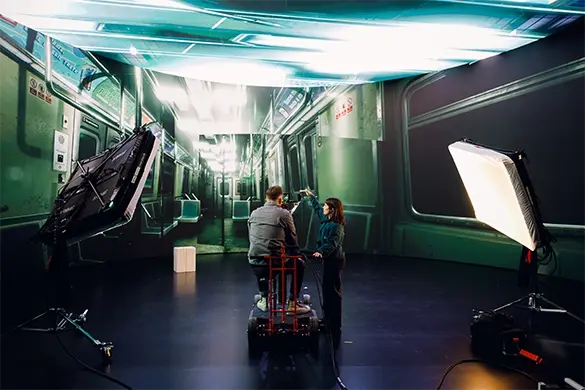
Filmmaking has always evolved alongside the tools that support it. As creative expectations rise and timelines shrink, teams need workflows that reduce friction without limiting what’s possible on screen. That’s where the shift toward real time VFX inside an LED volume studio comes in.
Instead of waiting weeks for post-production renders or relying on guesswork during green-screen shoots, creators can now build, visualize, and adjust their worlds directly on virtual stages.
This approach, known as in-camera VFX (ICVFX), changes the way production teams think about planning, iteration, and final delivery. Because virtual environments are rendered live, directors, DPs, and VFX supervisors can see the final look as it’s being captured, not as a rough proxy.
Lighting responds naturally to virtual backgrounds. Performers get real visual cues on the LED stage. And teams can solve problems in minutes instead of days.
More importantly, real time VFX gives creators a level of control that traditional workflows simply can’t match. Need to shift the sun’s angle, swap a location, or adjust atmospheric conditions? It can all happen in the moment. The result is a more predictable, collaborative, and cost-efficient production that still leaves plenty of room for exploration.
Real-time visual effects have become a defining shift in how modern productions are executed. Instead of creating environments after the shoot, in-camera VFX brings those worlds directly onto the stage—rendered live, synchronized with the camera, and visible to everyone on set.
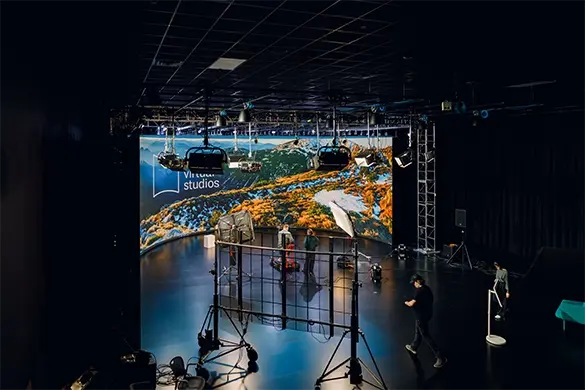
At its core, real-time VFX reimagines how virtual sets and effects are created, displayed, and captured during production. Traditional workflows rely on green screens and heavy post-production compositing. Teams shoot without seeing the final world, then spend weeks or months layering in 3D environments, lighting passes, effects, and cleanup. ICVFX, by contrast, lets productions capture the majority of those elements live on set inside the LED virtual production studio.
Three components make this possible:
Together, these components allow productions to collapse production, VFX, and lighting into one unified workflow. It’s not only faster, but more predictable and creatively flexible than traditional post-heavy methods.
Successful in-camera VFX depends on a coordinated stack of virtual production equipment and on-set practices. Together, these elements keep real-time rendering, performance, and cinematography aligned.
A foundational element is virtual production camera tracking. Systems like Stype RedSpy, Mo-Sys StarTracker, or OptiTrack feed continuous positional data to the game engine. This allows Unreal to update perspective, depth, and parallax in real time. Without accurate tracking, the environment risks feeling flat, misaligned, or disconnected from the physical camera movement.
Motion capture also plays a growing role in ICVFX workflows. Whether it’s full-body mocap for digital characters or subtle facial capture for performance-driven CG elements, motion capture tools help integrate real actors and CG assets into the same virtual world. This gives directors flexibility to blend live-action and digital performances without sacrificing timing or emotional nuance.
Live compositing is another core technique that elevates an ICVFX shoot. By blending practical elements, LED wall content, and foreground plates directly on set, teams can preview near-final shots. This helps directors create scenes more quickly. It gives DPs the clarity they need to improve lighting choices. And it lets VFX supervisors check integration before moving forward.
Additional equipment—genlock systems, DMX lighting controls tied to Unreal, lens-encoder integrations, and calibrated color management tools—round out the ecosystem. When these tools work together, productions can operate with confidence, with minimal dependency on post-production fixes.
When real-time tools, LED environments, and camera tracking work together, the creative possibilities expand quickly. Productions can move faster, iterate and experiment, and get in front of challenges before they become costly setbacks. With real-time VFX, teams gain control and assurance that traditional workflows rarely offer.
One of the most immediate advantages of LED ICVFX is the ability to see the final shot as it’s captured. Instead of shooting against green screens and hoping the composite aligns later, directors, DPs, and producers can evaluate framing, lighting, and environmental interaction in real time. Because the environment is rendered directly on the LED wall, teams can make informed decisions on the spot.
This reduces a significant amount of the uncertainty that typically creeps in during post-production. Green-screen workflows often require extensive keying, cleanup, color balancing, and object integration just to make the shot feel cohesive.
Real-time rendering also accelerates feedback loops. If something feels off—a shadow, a reflection, the position of a digital element—adjustments can be made instantly. This keeps the creative process fluid and prevents “fix it in post” from becoming the default solution. Ultimately, LED-based ICVFX helps teams avoid surprises, reduce post-production hours, and walk away from set knowing exactly what they captured.
One of the most significant advantages of real-time visualization on XR stages is the ability to experiment instantly. Instead of relying on storyboards or rough previs clips, directors and producers can make adjustments on the spot. Seeing the final impact immediately makes creative exploration more practical. Plus, it removes the uncertainty that comes with shooting against a blank green backdrop.
With traditional setups, the full scene doesn’t exist until post-production stitches everything together. That forces directors to imagine the final look, often making judgment calls without seeing how elements will ultimately interact. ICVFX eliminates that gap. The environment is already built, rendered, and responding dynamically to the camera.
One of the biggest advantages of real-time VFX is how naturally the lighting works inside virtual stages. Instead of relying on artificial setups to fake environmental light, LED screens act as true light sources. They display the digital environment and emit the same colors, brightness, and reflections you’d expect if you were shooting on location. That means actors, props, and wardrobe all catch light that matches the virtual world.
Green-screen setups can’t replicate this level of accuracy. They require carefully controlled lighting to imitate sunlight, skylight, or ambient glow. Even then, issues like green spill or flat reflections often show up in post. With LED walls, light is consistent, believable, and integrated into the scene from the start.
This natural cohesion makes every shot feel more realistic and reduces the amount of cleanup needed later. You get a final image that looks polished on set, rather than something that needs extensive adjustments after the fact.
One of the biggest advantages of real-time VFX is how much it simplifies the overall production pipeline. ICVFX allows teams to capture near-final shots so they push less work into post-production. Tasks that typically slow delivery, such as compositing, rotoscoping, and cleanup, are minimized or axed entirely.
This has a measurable impact on both cost and efficiency. Instead of waiting weeks to see how a scene comes together, editors and VFX teams receive shots that already contain the correct lighting, reflections, and environmental elements. That means fewer revisions, fewer surprises, and fewer bottlenecks. Traditional green-screen workflows often rely heavily on post-production pipelines to fine-tune every detail, which increases the risk of delays.
By resolving creative and technical decisions in the moment, ICVFX creates a more predictable workflow end to end.
Working inside a LED virtual production studio lets teams sidestep many hurdles that can complicate on-location shoots. Weather shifts, travel delays, daylight limitations, crew transportation, permit requirements, and scouting challenges can all derail production timelines. With ICVFX, these variables disappear.
Need to capture a sunrise, a desert highway, or a nighttime cityscape? Load the backdrop instantly, and it will look the same every take. Complex environments that would normally require days of travel and setup can be shot within hours.
Green-screen workflows can attempt to replicate this flexibility, but they require extensive planning to gather location-specific lighting references, HDRI captures, plates, and set measurements to achieve believable integration. ICVFX removes those layers of prep. The environment is already there, fully lit, interactive, and ready for the camera.
The capabilities of an ICVFX studio directly influence how seamlessly you can execute your vision. It’s not just about having an impressive LED volume studio. It’s about working with a partner that combines advanced virtual production equipment with a clear and collaborative process.
A top-tier ICVFX environment brings several technical pillars together: high-resolution LED walls capable of accurate color reproduction, robust camera-tracking systems, high-quality rendering pipelines, and a lighting ecosystem that syncs naturally with the digital environment.
These aren’t just specs on a list. They translate into real creative advantages: clean key edges, stable parallax, believable reflections, and lighting that reacts as you shoot.
But tools only matter if the team behind them knows how to orchestrate the workflow. By choosing a studio that prioritizes partnership, you have support from planning through the final shot. Producers need a space where they can move quickly, make informed decisions, and trust that the technical foundation won’t introduce surprises downstream. A strong studio team understands the unique pressures of working under tight timelines and helps remove friction before it becomes a problem.
The right partner doesn’t just hand over a stage, but navigates the process with you. They help translate ambitious ideas into practical setups, anticipate challenges, and adapt the stage configuration to fit the story—rather than forcing the story to fit the system.
When an in-camera VFX workflow is paired with hands-on expertise, real-time VFX becomes a predictable, flexible, and creatively empowering process. It’s the difference between merely accessing the technology and unlocking its full potential.
Real-time VFX inside an LED volume studio has moved from experimental to essential. It gives modern filmmakers a fast, reliable, and visually compelling way to build worlds without leaving the stage. These tools streamline production, reduce post-production bottlenecks, and create environments that feel authentic on camera.
With an ICVFX studio, you gain the freedom to iterate live, adjust your world instantly, and capture near-final imagery in a single pass. You save time, reduce uncertainty, and make more confident creative decisions at every stage. When supported by a knowledgeable, collaborative team, real-time VFX becomes a seamless extension of your creative process, not an obstacle you have to manage.
If you’re ready to build smarter, move faster, and bring ambitious ideas to life with precision, Forge Virtual Studios is here to help.

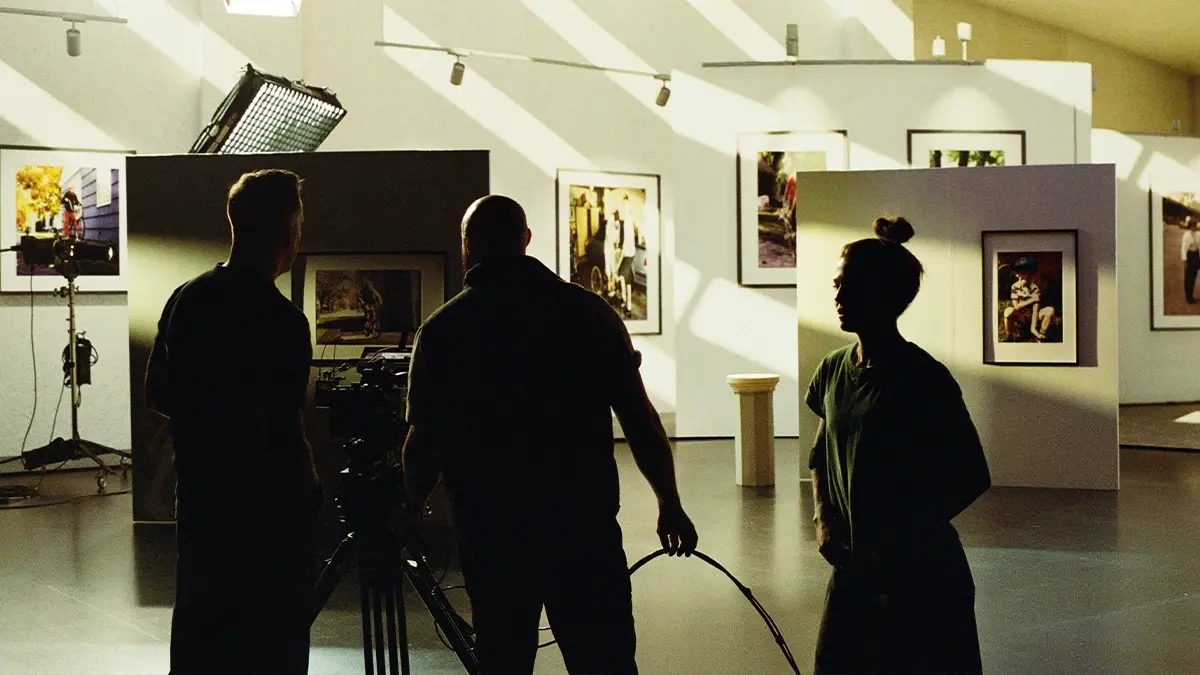
Driving scenes can make a car spot stand out by showing a vehicle in its best light — or add visual movement and action to an otherwise ordinary...
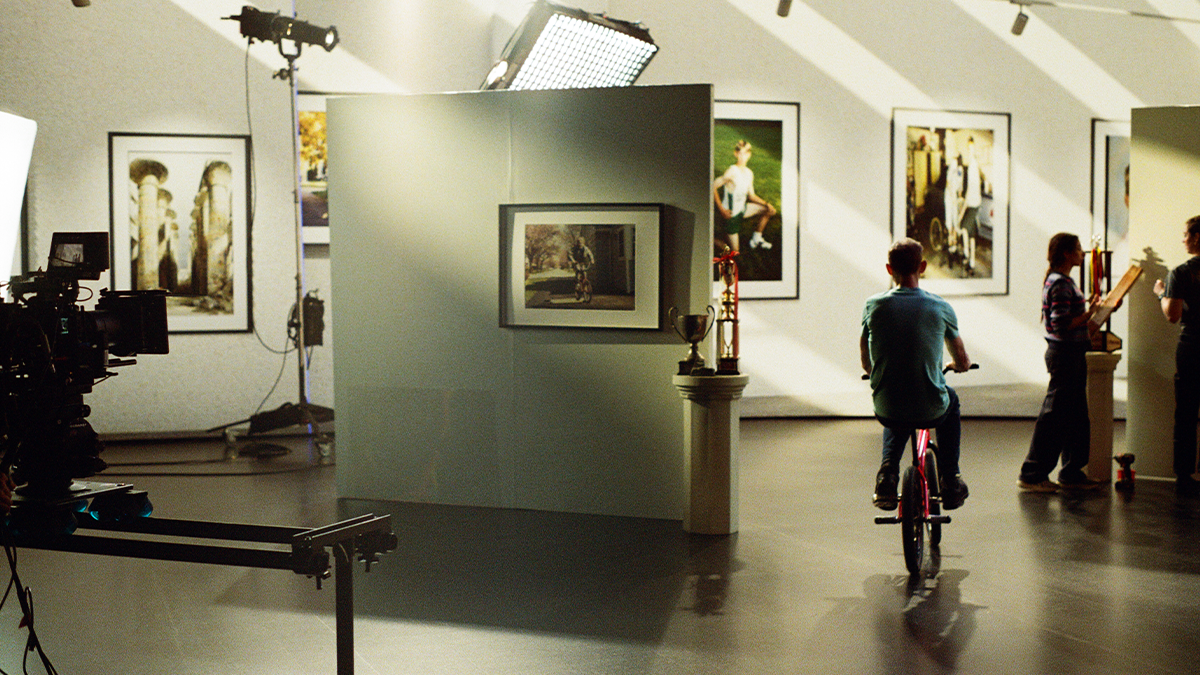
Light-emitting diode (LED) volumes revolutionize what filmmakers can achieve, but this process isn't automatic. The work put in by art directors...
Brands face intense pressure to keep up with always-on social media feeds while differentiating themselves from the competition. Many of these brands...