Virtual Production for Commercials: How Agencies Get More Spots Out of One Shoot Day
Film productions that use LED volumes let commercial teams capture multiple spots, cutdowns, and platform variants. They achieve this by swapping...

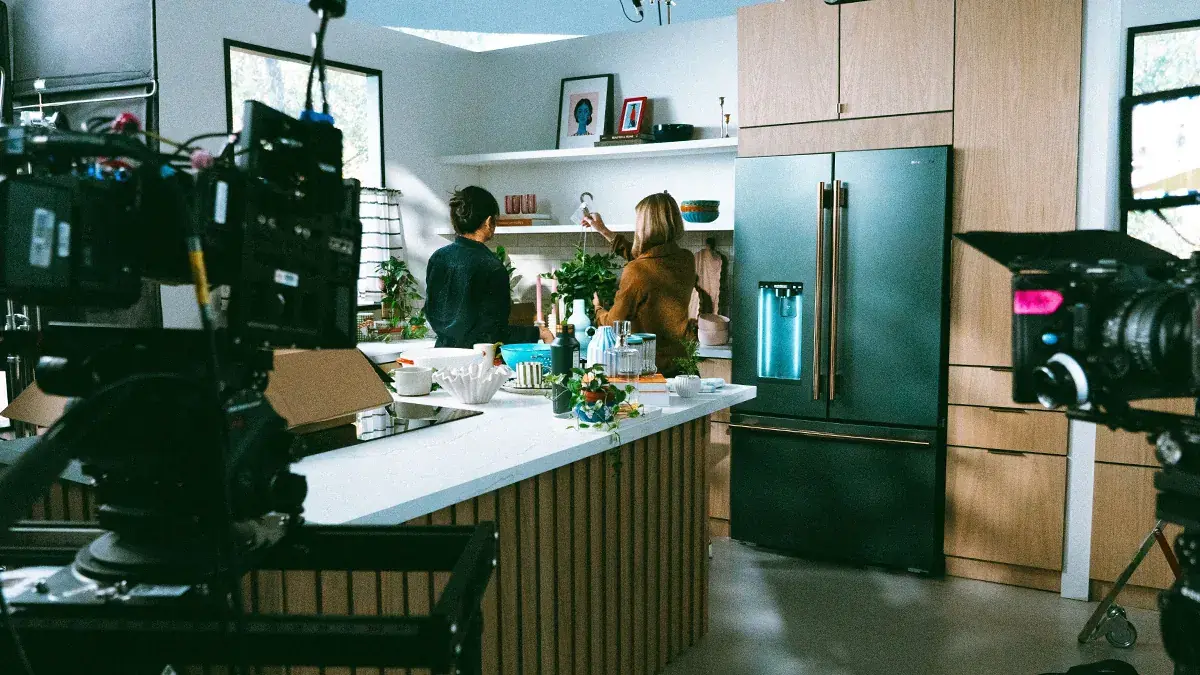
Film productions that use LED volumes let commercial teams capture multiple spots, cutdowns, and platform variants. They achieve this by swapping environments digitally on the LED wall rather than moving the company to new locations.
This virtual production (VP) can help creative agencies tackle some of the biggest challenges in modern commercial video production, such as high content output and tight timelines. Here's everything to consider when choosing virtual production for commercials.
Creative and advertising companies face various challenges, even with the best clients. These challenges are often unavoidable and inherent to the creative process, but the right production approach can significantly reduce their potential impact.
Key challenges include:
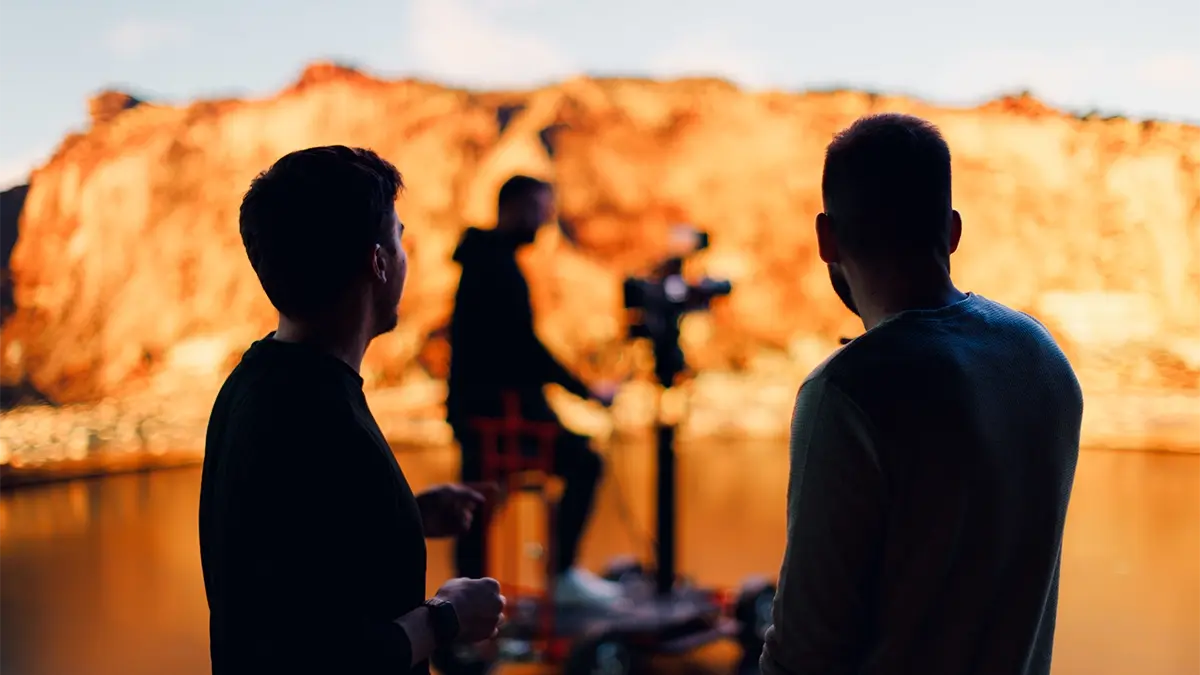
Using virtual production for commercials significantly expands what you can achieve with a single production day. Depending on your campaign, you can use the volume to create an engaging and immersive narrative that traverses multiple locations without ever leaving the studio facility. Alternatively, you can capture multiple shoots and videos back-to-back, filling an always-on campaign schedule in just one day.
LED volumes use either 2D plates with pre-rendered backgrounds or 3D plates with real-time rendering. Both options let you swap environments in minutes. This back-to-back location-swap workflow eliminates travel and weather risks, shortens production timelines, maximizes your team's creative control, and locks continuity across each shot. For maximum efficiency on multi-shoot days, you can set up video batches by look, such as by filming several interviews with the same background in a row.
LED volumes also enable instant resets, which is crucial for scenes with movement or action. For instance, a traditional driving scene would require the crew to drive the vehicle back to position A and reset any background elements. However, resetting a driving scene filmed with a stationary vehicle in front of an LED wall only requires the crew to hit a few buttons.
With in-camera VFX (ICVFX), virtual production lets you see exactly how your backgrounds and VFX look before you even film. This eliminates the typical guesswork of using VFX or green screens in film. Camera teams can frame subjects more appropriately, script supervisors can accurately assess continuity, and grip and electrics teams can confidently match on-set lighting to the background.
Eliminating guesswork is especially important for meeting clients' expectations. With ICVFX, what the client sees closely matches the delivered frame. Virtual production teams often carve out time for pre-visualization during pre-production, letting you see your film's final look before the camera rolls. This gives you and the client more opportunities to make creative changes and weave in brand imagery and visual storytelling, such as by incorporating brand colors in a virtual environment.
In-camera VFX also offer significant advantages for your post-production process:
Clients who want to visit the set should be able to watch near-final footage live and leave impressed.
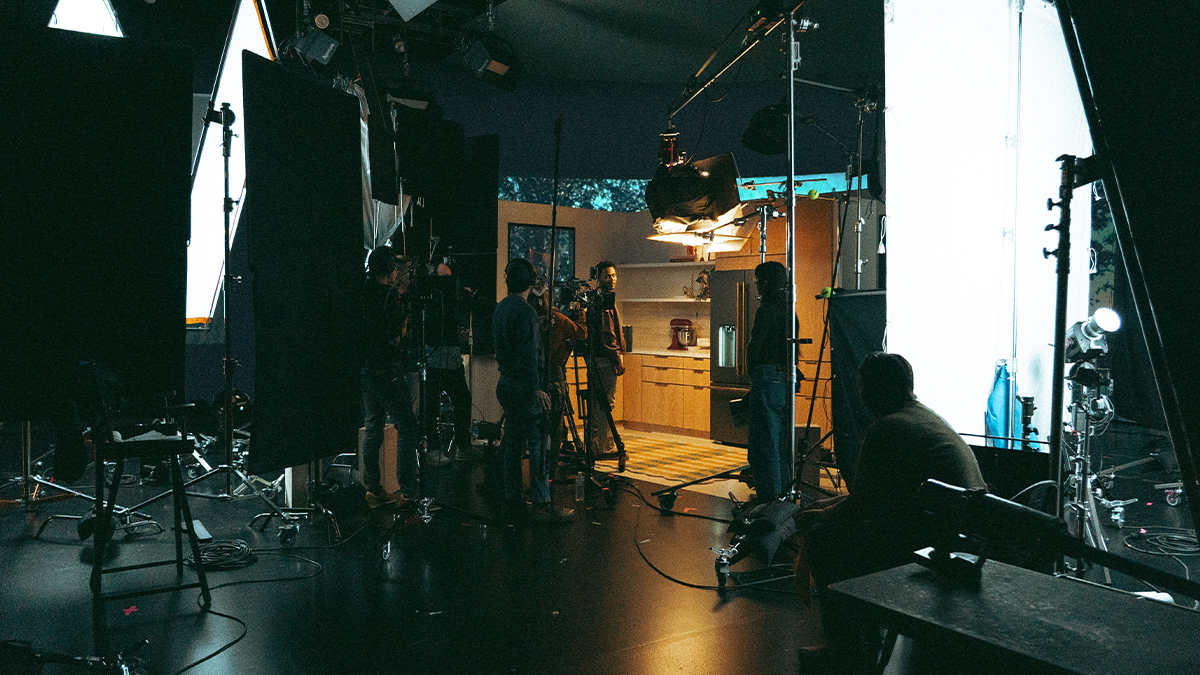
Many virtual studios include "video village" stations with monitors so clients can see what's happening on camera. Other studios offer client lounges and viewing rooms where clients can comfortably watch everything from outside the sound stage. This maximizes available on-set floor space and ensures chatter or devices don't disrupt audio quality without taking clients out of the experience.
A positive client-on-set experience can turn a shoot day into an important relationship asset, helping you build trust and memorability with your production partners. Consider everything that can potentially influence your client experiences, including:
Clients may not see the benefits of virtual production advertising if you don't translate the mechanics into business language. Forge's agency pitch kit can help you make your case in a way key decision-makers will understand.
Traditional production shoots are often scheduled at the whim of the weather. Unexpected rain can completely ruin an outdoor shoot and even impair sound quality for indoor productions.
Virtual production eliminates these issues by letting you film at seemingly any location inside a controlled sound stage. This way, you can lock production dates, confident that weather and other traditional setbacks won't disrupt clients' schedules or marketing campaigns.
An on-set VP team can change your LED volume's visuals while you're on set, letting you switch background environments in just a few minutes. This significantly expands how much you can achieve in a single production day by eliminating the need for location swaps and company moves. It can also lower your budget by minimizing travel, permit, and insurance costs.
Most studios keep the volume's visual assets, such as brand-specific custom environments, after your production wraps. This means you can easily return to the same virtual production studio later and build upon your previous films. This is especially important for branded content and episodic campaigns that rely on consistent imagery for recall and recognition.
Using LED walls for commercial production lets you capture multiple film variations at once. With fast resets, you can quickly capture different takes for different platforms. For instance, you can switch between horizontal and vertical aspect ratios without cropping the footage or impacting video quality by quickly filming both versions on set.
Taking it a step further, easy-to-swap backgrounds let you film slightly different versions of the same movie for different markets. So, if you're marketing to specific cities, you could capture the same moment in front of different landmarks in each location. This gives you multiple location-specific campaign deliverables while only requiring a little extra time on set.
Virtual production is especially ideal for the following commercial film formats:
Several factors can affect the total cost of your unique commercial production, including project size, timeline, and location. At the same time, moving your film to a virtual stage can offset some of the costs of traditional production processes, such as separate rental costs and distributed location risks.
For example, commercial video production in Chicago often requires you to budget for permits, weather, traffic, parking, and a lot more, especially when filming outdoors. However, you can dodge most of these concerns when filming in a VP studio while still capturing both interior and exterior scenes.
Check out our guide on what a film studio rental costs to learn more.
The idea is rarely the constraint with modern productions — it's the logistics. However, virtual production for commercials can streamline your client's next project while expanding what your agency can practically achieve.
Located just outside of Chicago, Forge Virtual Studios offers multiple studio spaces with access to LED walls, high-power lights, and everything you need for a positive client-on-set experience. Explore our For Agencies page to learn more about our process, and contact us to discuss projects or book a tour.

Film productions that use LED volumes let commercial teams capture multiple spots, cutdowns, and platform variants. They achieve this by swapping...
Virtual production (VP) can streamline and revolutionize your shoot, and a studio tour lets you see exactly how. A good virtual production studio...
Renting a sound stage today gives you access to a controlled, sound-treated shooting environment. Depending on the studio, you may even be able to...