Authentic Brand Storytelling: How to Make Content That Actually Connects
Internet trends and popular aesthetics can earn your brand brief notoriety, but they'll only get you so far if they're not authentic to your brand's...
6 min read
Drew English:
Jun 25, 2026
Internet trends and popular aesthetics can earn your brand brief notoriety, but they'll only get you so far if they're not authentic to your brand's image and perception. Cinematic brand content must move beyond the noise of digital marketing and instead prioritize resonance, intentionality, and visual consistency.
When done right, authentic brand storytelling reinforces brand trust and differentiation while fostering genuine connections with audiences. When done wrong, your brand story can feel performative and engineered, blending in with every other piece of online content.
Discover the power of authentic storytelling in brand marketing, along with the strategies and environments that support this level of creative flow.
Many digital styles in the early 2020s were defined by low-fidelity (lo-fi) aesthetics. This popularity predominantly stemmed from Lo-Fi hip-hop videos on YouTube and other apps, which many people used as background while studying, cleaning, resting, and more. They often featured tinny sound quality and raw, unfinished picture quality. This ambiance made the videos feel authentic, as if viewers were getting a glimpse inside a hip-hop artist's personal library.
Many brands effectively leveraged the lo-fi aesthetic to grab audiences and build brand authenticity. However, only so many brands can use the same strategy to feel authentic. The bubble pops eventually, and none of them feel authentic, only engineered. This is exactly what happened with lo-fi and other types of "raw" content.
Audiences are getting better and better at recognizing performative authenticity. Outdated aesthetics, AI, and heavily scripted content can quickly turn viewers away and leave them with a sour impression of your brand.
Rather than blending in with every other brand using the same aesthetics and styles, authentic brand storytelling hinges on intentionality and differentiation. Brands must stop asking what aesthetics or solutions work for competitors and start asking why they work. Every element of your brand film should build upon the rest to deliver your message and showcase exactly what makes your organization (and your offerings) so special.
So, while a "raw" aesthetic could serve your brand, its usage has to be intentional. For instance, lo-fi could create a sense of nostalgia around the early 2020s, which could serve your story's setting. Alternatively, a raw, unfinished look could create a "work in progress" feel to a brand impression, which could benefit start-ups or businesses supported by crowdfunding. If you're using a "before and after" format to show how far your business has evolved, you could open with a raw and tinny aesthetic before replacing it with vibrant color correction and clean audio.
Narrative clarity describes how effectively an audience can understand and follow your story's message, helping each beat flow naturally and logically. Strong narrative clarity keeps audiences from getting lost when watching your film. This, in turn, helps you focus more attention on the message and its lasting impact. It often requires writers and creative directors to cut down unnecessary or tangential aspects of their message to avoid confusion and hone in on what's most important.
For optimal clarity, you should define your brand narrative meaning and any other campaign goals early in pre-production. This proactive approach lets you build an intentional brand narrative framework across each film and campaign while aligning all teams on the same vision.
Starting with strong narrative clarity helps brands define emotional truth, which is how the brand makes customers feel. For example, a brand narrative focused on building hope and excitement could make customers feel hopeful and excited the next time they see the brand name. Intentional audience connection is especially crucial for long-term branding, creating emotional resonance to strategically guide potential consumers further down the sales funnel.
There's no universal solution for authentic brand storytelling — otherwise, every brand would run into the lo-fi issue again. Instead, brand authenticity and realism are rooted in vulnerability, honesty, truth, and whatever makes your organization unique.
Films should maintain consistency between brand values and execution. Each new piece of content should clearly communicate what sets your brand apart while reminding long-term customers why they continue to choose your offerings.
Collaboration and creativity also play crucial roles in making brand stories feel real. The best and most memorable creative projects aren't one-person productions. Instead, they often combine teams of writers, filmmakers, and editors, allowing everyone to contribute their ideas and special talents to the mix. Different people within your organization may contribute fresh ideas or angles to show your brand from different perspectives, helping you develop a story that's truly authentic to your team.
Performative authenticity is often apparent when brands try too hard to stand out or lean too heavily into a new technology, such as generative AI, without using the technology effectively. This causes some brands to disregard the power of cinematic film production completely.
However, unlike AI, high-quality, cinematic visuals won't turn viewers away. They will only enhance your brand's professional image, especially through intentional execution and craft.
Various elements of cinematic production can reinforce your brand's value and trust, including:
Professional and authentic brand storytelling builds audience respect. This is especially true among consumers with high standards, such as business-to-business clients.
These types of consumers often won't make a decision about your brand the first time they see your film. Instead, you need to build long-term trust and recognition through visually consistent campaigns.
Visual consistency across platforms and content builds brand equity by cementing a clear, intentional perception of your organization. Long-term partnerships with professional production companies and studios can help brands reinforce a consistent image. This way, they can reuse colors, assets, and production techniques while still making each film feel new and authentic.
The production environment you choose (or create) can directly impact the crew's creative flow, the talent's performance, and, ultimately, the audience's immersion.
For instance, an actor meant to look relaxed in nature may have an easier time capturing that vibe if they're actually in nature rather than in front of a green screen. At the same time, filming in real-world outdoor locations can create extensive production constraints that limit creative focus in other ways.
Virtual production environments offer a solution for reducing this creative friction.
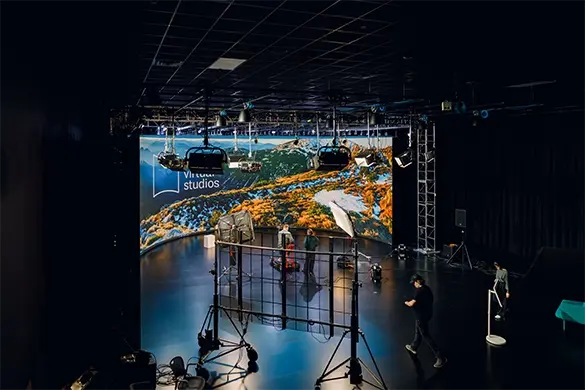
Virtual studios use "volumes," or walls built from light-emitting diode (LED) screens, to create bright, realistic-looking backgrounds. This allows filmmakers to capture footage across various settings without ever leaving the studio.
These controlled environments help directors and talent focus on emotion execution and intentionality by letting them see exactly what the final picture will look like. Actors can respond to whatever environment is on the screen without having to imagine the environment in their heads.
Plus, with the entire crew able to see what's on screen, production teams can maintain alignment and visual cohesion while working towards a shared vision.
Of course, you can't just turn on the camera and the LED walls for virtual production and expect to create authentic marketing content. Technology must support storytelling rather than replace it.
Like any production technique, virtual production requires intentionality and an approach tailored to your unique message and story. Professional virtual production teams can help you look past the technology and embrace the streamlined, unrivaled workflows that LED volumes offer.
Visual brand storytelling connects with viewers' senses and emotions to create a lasting impact that resonates long after they stop watching your film. This emotional resonance in marketing can build long-term recall and recognition, helping each of your brand stories build upon the last. You can then use each new story to differentiate your brand in a new way, such as by focusing on distinct offerings, success stories, or company values.
Strengthening recall can also reinforce trust if your campaigns stay consistently authentic. According to the "3-7-27" rule, potential consumers need to see your branded content three times before they recognize you, seven times before they actively remember you, and 27 times before they trust you.
Authentic brand storytelling with strong emotional resonance keeps this process moving forward and can even hasten the timeline, building trust after only a few brand films rather than 27.
All of this is to say that it's time for brands to move beyond vanity metrics and instead focus more on narrative impact. Long-term branding goals don't always have an exact number for their return on investment (ROI), as your elevated brand equity could benefit your organization for years to come.
Brands should still track vanity and engagement metrics — ideally, they should track as many metrics and key performance indicators as possible to capture a holistic idea of their brand perception. However, to maintain authenticity and intentionality, immersive brand stories should prioritize narrative impact and the messages organizations aim to convey to consumers.
Narrative clarity and cinematic craft can make your story feel more authentic and emotionally resonant with the right strategies, but you can't go in blind. Brands must have a deep understanding of their own values and public perception to craft messages with strong visuals, intentionality, and the sense of realness that audiences look for. This requires brands to think beyond reactive trend content and focus on what differentiates them from the competition.
The right partnership can help marketing teams embrace authentic brand storytelling using emotional truth, visual consistency, and narrative intentionality. Schedule a consultation or tour of Forge Virtual Studios to see how our environment can support your narrative, and explore our FAQ to learn about our technical capabilities.
Drew is the co-founder and CEO of Forge Virtual Studios. He frequently writes about the intersection of craftsmanship, creativity and technology in the film industry, as well as creative entrepreneurship. You can keep up with Drew's thoughts and other Forge updates by following him on LinkedIn.
Internet trends and popular aesthetics can earn your brand brief notoriety, but they'll only get you so far if they're not authentic to your brand's...
From The Mandalorian to branding and marketing content, virtual sets have revolutionized various aspects of film production. Virtual production...
Kids often comment "Absolute Cinema" beneath videos and films they really like. But what does "cinema" really look like?