6 min read

Virtual Sets: How Production Teams Are Using Them to Shoot Smarter

Virtual Sets: How Production Teams Are Using Them to Shoot Smarter
12:22

From The Mandalorian to branding and marketing content, virtual sets have revolutionized various aspects of film production. Virtual production technology offers modern production teams greater creative control, scheduling reliability, and workflow efficiency.

Through valuable and convenient alternatives to traditional on-location and green screen production strategies, crews can achieve more in less time (and often at lower cost). That said, specific virtual production studio benefits vary from project to project.

Learn how production teams are using virtual set technology to overcome common production hurdles while giving directors unmatched creative control.


Why Production Teams Are Moving Beyond Traditional Location Limitations

Traditional location limitations can take various forms, leaving your production with many unpredictable variables. Filming at any third-party location requires you to manage various logistics, including permits, travel, parking, equipment power, scheduling, and crew amenities. Production teams may also need to plan or account for various on-set hurdles, such as limited space for camera setup, background elements that don't fit your color palette, or traffic or loud appliances that impact sound.

Filming at outdoor locations further complicates production. Crews must account for weather and have backup plans in case they're rained out, ensuring unexpected weather doesn't set your entire budget back. Clouds and sun movement can also impair continuity by creating inconsistent shadows, contrast, and exposure between shots. This often requires extra post-production work to fix (if it's even fixable), and it significantly limits what crews can capture during "Golden Hour" when the sky looks the most beautiful.

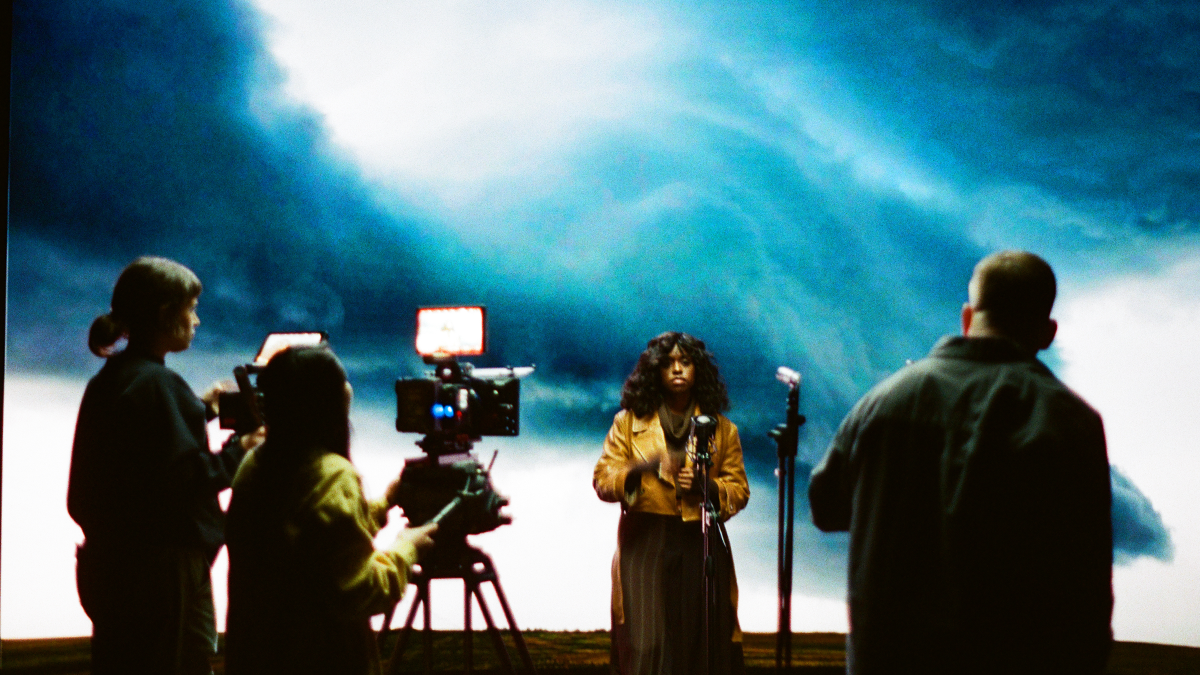
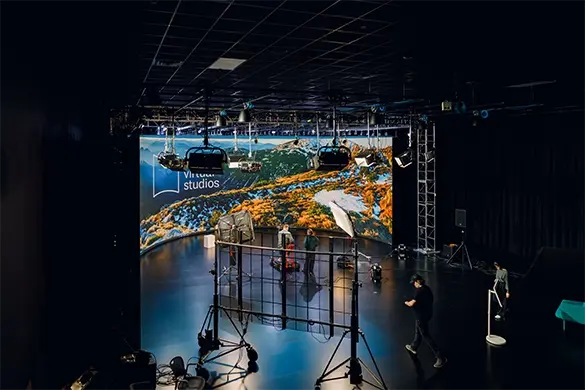
Controlled virtual production environments eliminate much of this uncertainty and logistical friction, giving creative directors unmatched control over the screen. They use "volumes" or walls built from hundreds of light-emitting diode (LED) screens to recreate practically any location imaginable. Crew won't need to travel far or guess about how the final picture will look. Plus, the controlled lighting environment lets you film during "Golden Hour" for 12 hours, if you need to.


Traditional Production vs. Virtual Production Costs

Both traditional and LED wall film production costs vary based on many production factors, such as the number of locations, filming days, and crew members you'll need. Virtual set costs may be higher in some areas, such as costing more than an individual traditional location permit.

However, the cost savings of virtual production compound as production needs scale, reducing the number of locations and production days while eliminating weather and other financial risks. Additionally, the ROI from partnering with a virtual production studio can compound across campaigns by reusing assets, colors, and visuals to build brand recognition.


Real-Time Rendering Changes Creative Decision-Making On Set

Beyond logistics and budgets, pre-visualization is one of the top benefits of virtual production studios. Creative directors can preview and test how their footage will look before production officially begins, allowing them to make creative changes and prepare all necessary tools during pre-production. On set, crews can see exactly how the final film will look, even if it requires visual effects (VFX), effectively keeping all departments aligned on the same vision.

Pre-visualization is especially beneficial when comparing virtual sets to green screens. Legacy green- and blue-screen approaches require teams to wait until post-production to see their backgrounds and VFX. This limits crews' ability to see how the film will look, which can compromise framing, blocking, lighting, and cohesion.


Virtual Set Technology Overview

Explore the technologies that make pre-visualization workflows possible and how they bolster creative responsiveness:

  • Real-time rendering: LED volume production studios use Unreal Engine and other high-power engines to render customized, photorealistic visuals and graphics in real-time. Using real-time rendering rather than pre-rendered backgrounds gives crews more creative freedom when angling and moving the camera. Plus, on-set technicians and in-camera VFX (ICVFX) artists enable creative directors to adjust the background during production with minimal delay.
  • Camera tracking: Camera sensors track cameras' every movement, including the shutter speed, focus, zoom, and precise angle. The LED screens respond to this movement in real-time to preserve photorealistic depth and cohesion, significantly expanding creative directors' and cinematographers' creative possibilities.
  • LED floors, ceilings, and wild walls: Even with virtual production, static shots where the camera faces directly forward rarely feel exciting. Movable LED walls, floors, and ceilings let you expand your virtual production space to support different camera angles and movement. For instance, your camera could follow your subject as they walk and talk, or you could use the ceiling to create inspiring low-angle shots.


Virtual Sets Improve Efficiency Without Sacrificing Cinematic Quality

By supporting production efficiency and visual quality, virtual sets significantly expand what production teams can achieve while streamlining processes.


Lighting Consistency

Similar to cameras, lighting equipment for virtual production integrates in real-time with the rest of the set's technical systems. This way, gaffers and grips don't need to continuously adjust lights to maintain consistent exposure or contrast. Instead, the lights' harshness and colors respond immediately to whatever environment the LED volume is simulating, ensuring key and fill lights match the background.

This gives teams a significant advantage over traditional outdoor filming. Rather than being at the whim of the sun, clouds, and precipitation, crews can capture exterior scenes while holding the "sun" in the same position all day.

This is especially beneficial for production crews that want to film at sunrise, sunset, or Golden Hour. Previously, Golden Hour shoots needed to be fast, efficiently structured, and, ultimately, optional, as filming in front of a Golden Hour sky was never guaranteed. Now, even the sky isn't a limitation.


Time Savings

LED volume production saves crews and brands time in various ways:

  • Integrated systems enable cameras, backgrounds, and lights to respond to one another in real time, reducing setup time and minimizing the risk of human error.
  • Pre-visualization allows crews to test footage before production, allowing them to adapt to and prepare for all potential setbacks or delays.
  • Real-time VFX eliminates the guesswork of green screens, allowing directors and crews to immediately see what is on the screen rather than referencing test footage or storyboards.
  • Brands don't have to wait for lengthy post-production to complete their films, even if those films require VFX.

Combined, these examples of time savings can significantly reduce production budgets and speed up distribution timelines. This helps organizations meet the demands of today's complex, oversaturated branding market, which requires teams to produce content faster at a greater scale to stand out.


Production Continuity

From props swapping places in the background to shadows changing direction angles between shots, continuity errors can quickly remind audiences that they're watching a film. This can break the immersion and realism of your narrative and the impact of your message while also giving your brand an unprofessional look.

Virtual sets maximize cohesion and continuity by providing controllable environments that crews can actually see. This makes it easier to maintain blocking and consistency between each take, while integrated lighting eliminates the guesswork of color correction.


Multi-Location Flexibility

Virtual set technology allows crews to seemingly capture footage from multiple locations while operating under a single roof. This simplifies production logistics while expanding what brands can achieve.

For instance, if a brand film focuses on a family on vacation, the crew could prepare a handful of tropical locations and a few wardrobe changes to capture an entire trip in a single day. Photorealistic visuals ensure the footage looks as real as the actual location.


The Most Effective Virtual Productions Start With Strong Pre-Production

Pre-production is the first stage of production, in which producers and crew plan every aspect of production and post-production. This streamlines and protects momentum for each subsequent step, preventing easily avoidable issues from causing expensive production or distribution delays.

Key aspects of pre-production for virtual sets include:

  • Pre-visualization: Test footage and pre-visualization workflows allow crews to see how films will look before production. This way, they can correct noticeable issues, and creative directors can request changes or tweaks without causing setbacks.
  • Environment planning: Unreal Engine technicians and ICVFX artists plan and create digital environments for film based on the creative directors' visions. This effectively moves many of post-production's most time-consuming steps into pre-production instead, giving producers and directors more time to plan everything else.
  • Cross-team collaboration: Virtual production requires multiple departments, such as VFX artists, camera operators, sound mixers, and creative teams, to coordinate together toward the same vision. Experienced production teams with effective communication and collaborative virtual production approaches work together in pre-production and beyond to ensure each element of your film supports your goals.


Virtual Sets Versus Traditional Locations: Choosing The Right Approach

Choosing between Unreal Engine virtual production studios and traditional locations requires you to consider various aspects of your unique production, as both offer distinct advantages.

Benefits of choosing virtual sets include:

  • More control over background elements and visuals
  • Better lighting consistency with minimal production effort
  • Greater creative freedom when choosing locations and backgrounds
  • Greater flexibility in scheduling and other logistics
  • Better sound quality, as you won't have to worry about traffic, nature, or other interferences
  • Less uncertainty around your budget, as weather and pulled permits shouldn't cause production delays
  • Better opportunities for recall and recognition when reusing assets across campaigns

Benefits of choosing traditional locations include:

  • Elevated realism by filming in a real-life location
  • Immersive audio that matches the background, assuming audio quality is usable
  • Stronger brand authenticity when filming in local, recognizable locations, such as in front of a landmark
  • No required visual effects or rendering if you only need a background

Still unsure? A dedicated virtual production company can help you determine if virtual sets suit your precise production needs.


Production Environments Matter As Much As Production Technology

While virtual production technology is revolutionary, it's only as powerful as the team behind the camera. A production-ready studio environment requires strong workflow support, reliability, collaboration, and production experience.

Dedicated crews and creative teams know how virtual production works and how each piece of equipment integrates with the rest of the digital system. This knowledge allows them to support brands and creative directors as they bring their ideas to life.

Forge Virtual Studios offers an advanced studio environment built around production efficiency and creative flexibility. Explore the Forge facility and schedule a site visit or demo to see how virtual sets can support your project, and check out Forge's blogs for more technical deep dives.

About the Author
Drew English

Drew is the co-founder and CEO of Forge Virtual Studios. He frequently writes about the intersection of craftsmanship, creativity and technology in the film industry, as well as creative entrepreneurship. You can keep up with Drew's thoughts and other Forge updates by following him on LinkedIn.