Virtual Sets: How Production Teams Are Using Them to Shoot Smarter
From The Mandalorian to branding and marketing content, virtual sets have revolutionized various aspects of film production. Virtual production...
6 min read
Drew English:
Jun 24, 2026
Kids often comment "Absolute Cinema" beneath videos and films they really like. But what does "cinema" really look like?
Cinematic storytelling is a deliberate narrative and visual discipline that shapes audience perception, emotional connection, and brand authority. It's a practice built from experience, intentionality, and an understanding of visual language, and it can give brands and creative directors unmatched control over their messages.
Cinematic storytelling requires more than a running camera. It's a finely honed craft that blends visual, audio, and narrative practices to create a cohesive and engaging story. Cinematic stories are all about high production value, immersive environments, and attention to story structure. While a cinematic level of quality can take many forms, you always know it when you see it.
For brands, cinematic stories can effectively hook viewers' attention and create lasting impressions that drive recall and loyalty. They use relatable conflicts, characters, and environments to create emotional connections with viewers. These stories encourage viewers to root for the characters on screen as you softly deliver your brand's message and differentiate your offerings from competitors.
Cinematic brand storytelling leverages multiple types of communication at once:
Most traditional branded content simply delivers information, such as by listing your product's differentiator or sharing an update about your organization. Standard marketing ads often only take short-term approaches, promoting sales or prices that competitors could easily match a week later. What this type of content rarely tells audiences is why their messages matter.
Cinematic stories and films give viewers genuine reasons to care about your information, often by relating to real-world issues and concerns. They use engaging audio and visuals to give viewers a reason to watch past the first five seconds. Then, they leverage topics that impact viewers' lives, such as the problems your products resolve, while differentiating your solutions as long-term.
Brand films are also often evergreen, allowing you to reuse them or readjust them across campaigns or on your website. For example, a marketing team could reuse a film focused on your brand's values and impact by editing it into 60-, 30-, and 15-second versions and posting to your website and across every social media platform. They can then repost or rework this content across campaigns to continuously introduce or reintroduce viewers to the brand while also focusing on new topics.
One of the core rules of film is to "show, not tell," which can mean a lot of things in visual storytelling for marketing. Don't just have a narrator explain what a product does — instead, use demonstrations, animations, and relatable scenarios to showcase exactly how your product can help viewers. Don't just tell your viewer that customers trust your brand — use customer testimonials, reviews, case studies, and user-generated content to build credibility and social proof.
Beyond your broader message, the rule of "show, don't tell" can support your film's engagement and emotional immersion. Strategic visual language gives viewers reasons to genuinely watch your film rather than look away. This can help them notice and recall more details, allowing each visual element to build upon the last.
Narrative immersion also helps you connect with the audience's psychology by leveraging emotions such as empathy and nostalgia. For instance, a film aiming to evoke an '80s aesthetic could use iconographic designs and recognizable music from that era to immediately establish the setting and tap into older audiences' nostalgia.
Furthermore, effective narrative immersion and emotional storytelling drive long-term brand resonance by reinforcing recall and recognition. Viewers may be more likely to remember impactful messages conveyed through relatable characters and scenarios.
Reusing colors, characters, sounds, and visual assets can also help repeat viewers immediately remember your previous brand film, allowing them to pick up where the last one left off. This stresses the importance of long-term partnerships with professional Midwest virtual production studios, such as Forge Virtual Studios.
Your film's opening image (and every frame after) creates an immediate impression for viewers, establishing your film's themes, color palette, and level of professional quality. Cinematic language defines nearly every aspect of your film, even if you don't pay attention to it. With the right approach, and with a team that's fluent in visual language, your visual decisions can communicate authority, intimacy, energy, and trust.
Key aspects of visual language include:
From the script to the camera's movement, and from the speed of cuts to the pace of the music, rhythm influences how viewers experience your story. The right pacing decisions can directly influence audience retention, such as using a fast rhythm to grab young viewers' attention or a slower, more sentimental rhythm to create emotional impact with business clients.
Rhythm and pacing can also influence your brand sentiment. High-tension brand stories often lean into conflict and problem-solving. For example, a case study film could spotlight the problems a previous client faced before working with your organization, highlighting the feelings of helplessness that future clients are currently experiencing. On the other hand, high-comfort brand stories lean more into feelings of convenience and reassurance, such as building trust and focusing on your organization's positive impacts.
Cinematic storytelling can also build trust, memorability, and your brand's perceived value in a handful of ways. At a base level, a high-quality film with cinematic visuals reflects a strong attention to detail and quality, which should (hopefully) extend to the rest of your organization.
Beyond that, cinematic stories and strong visual narratives connect with viewers on a deeper level, positioning your brand not just as a convenient choice but as the right choice. This is often what differentiates long-term brand storytelling from short-term performance content. It's not about getting customers to choose your brand this week, but about keeping them coming back week after week, making your brand the unquestionable choice.
These long-term impacts are particularly important for business-to-business (B2B) branding. In the B2B world, most clients won't be in a position to choose your brand as their company's solution the first time they see your film. Instead, you'll need to build long-term memorability and emotional resonance, encouraging them to remember your solutions when the time is right.
When approaching brand equity through video, marketing and creative directors should consider both the short and long-term return on investment (ROI). Too many teams focus only on short-term ROI metrics, such as sales and immediate leads generated, but this doesn't capture the full picture. After all, your brand film could have left an impact on a massive B2B client who only left a like on your post — but they may come back later if your film left a strong impression.
Professional marketing production teams can help you consider all the factors impacting ROI. This allows brands to continuously refine each campaign strategy based on the last campaign's success.
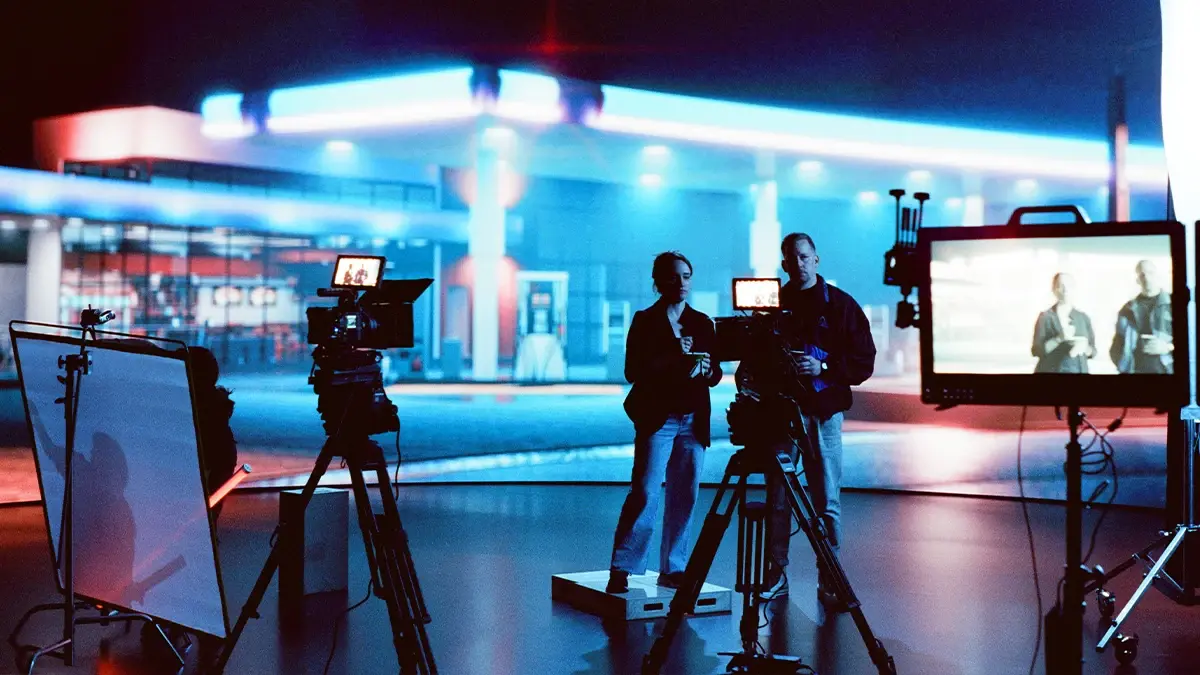
Production limitations, such as location permits, travel, and weather, can negatively impact storytelling execution, especially if you don't plan for them. Virtual production stages offer a seamless solution for cinematic video production for brands, perfecting storytelling on LED stages.
LED volumes and pre-visualization workflows eliminate the constraints of filming on location while giving creative directors more power and transparency over their films' final look. The controlled environments of virtual studios also improve consistency and iteration by working every detail down to a science rather than leaving things like lighting and visual effects to guesswork.
Cinematic storytelling allows brands to shape viewers' experiences and create lasting impressions that support current and future campaigns. Visual storytelling for marketing requires you to think beyond standard content creation and consider audience psychology, visual immersion, and what your brand is actually trying to say.
Partnering with an experienced virtual production studio, such as Forge, can help you facilitate your cinematic goals using pre-visualization techniques and a deep knowledge of what cinematic storytelling is.
Drew is the co-founder and CEO of Forge Virtual Studios. He frequently writes about the intersection of craftsmanship, creativity and technology in the film industry, as well as creative entrepreneurship. You can keep up with Drew's thoughts and other Forge updates by following him on LinkedIn.
From The Mandalorian to branding and marketing content, virtual sets have revolutionized various aspects of film production. Virtual production...
Kids often comment "Absolute Cinema" beneath videos and films they really like. But what does "cinema" really look like?
Modern branded content production frequently uses film content to engage viewers and expand brands' reach through social media, product pages, and...